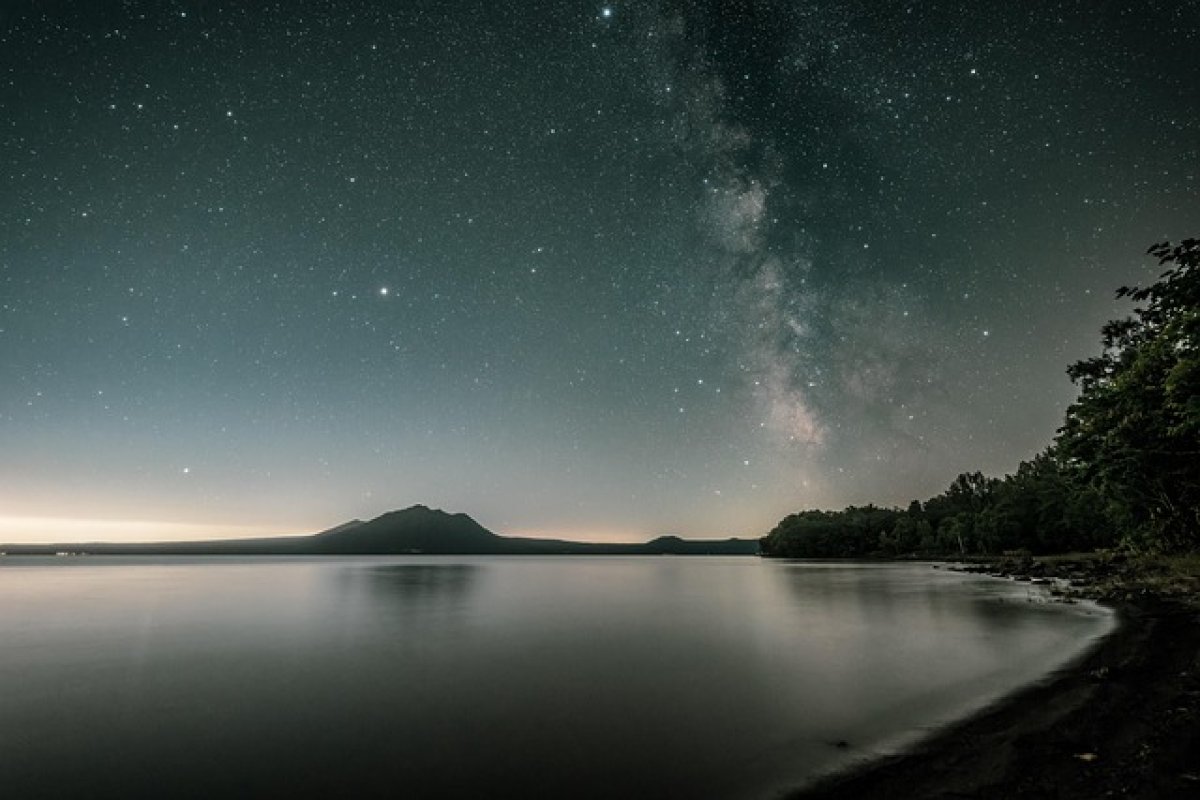
Tourists have been flocking to India's beaches, mountains, temples, and wildlife for centuries. A subtle shift is taking place right now, and it has nothing to do with the earth below us but rather the sky above. The practice of "astro-tourism," or visiting areas with very dark skies in order to observe planetary bodies, deep-space objects, and stars, has grown from a niche pastime to an industry-wide phenomenon.
There was purpose behind this shift. Due to light pollution, the night sky is no longer visible to most city dwellers. The Milky Way has eluded many generations of people. Travelers are now seeking for areas where nightfall is still a common occurrence. Under the radar, India has emerged as a top destination for air travel. Extremely remote places, vast deserts at high elevations, and desolate plateaus are all part of it.
The epicentre of this uprising is the small town of Hanle in eastern Ladakh. It is now the country's premier dark-sky destination.
Astrogen Tourism in India on the Rise
Astro-tourism isn't concerned with rapidity or opulence. Having a new perspective, remaining calm, and being patient are key. This kind of traveler isn't after tourist traps; rather, they want solitude, darkness, and clarity.
In this scenario, the geography of India is significant. The atmosphere has less of an impact in higher elevations. The sky is often brighter in cold desert regions since there is less precipitation there. In places where the population is small, the amount of artificial lighting is lower. Under these circumstances, stargazing is on par with the finest locations on Earth.
The past several years have seen an increase in interest beyond the realm of professional astronomers. Trips are now planned around astronomical events by families, students, photographers, and spiritual travelers. This shift allowed for the development of new activities, such as guided star walks, camps for night photography, and journeys organized according to astronomical calendars.
Observing the Night Sky in Hanle: India's Finest Observatory
Situated on the eastern edge of Ladakh, Hanle is part of the Changthang region. Being almost 4,500 meters altitude, it is able to withstand the majority of atmospheric disturbances. The air is ideal for stargazing because it is dry, chilly, and relatively stable.
In addition to its height, the great distance between Hanle and any other point makes it unique. Nearby, you won't find any major cities, industrial zones, or highways. Artificial light nearly disappears as soon as the sun sets. The sky becomes a beautiful, velvety painting.
Due to its high elevation, dry air, and dearth of light, Hanle is among the top locations on Earth to view the stars. As opposed to a flat surface, the stars in this night sky appear to be at varying depths, giving the impression of true three-dimensionality.
The Meaning of a Dark Sky Preserve
There is more to a Dark Sky Reserve than meets the eye. There is strict regulation of artificial light in this protected region so that the nighttime environment remains unchanged. There is less natural light coming in from the sky since it is either shaded or restricted to specific wavelengths.
This line of thinking extends beyond Hanle's tourist industry. In order to ensure the safety of the night, many facilities, including communities and hotels, adhere to regulations. That way, present and future generations can enjoy the same sky.
Protecting Hanle has made it a global icon for astro-tourism and an inspiration for similar initiatives in India.
The Mathematical Basis of Star Maps
The process of locating and tracking objects in the night sky by observing their positions in the sky is called star mapping. Farmers and navigators of ancient times relied on this data. It is now commonly used for research, photography, and academic purposes.
The night sky appears to be in motion because the Earth revolves on its axis. The rising and setting of the stars mirrors that of the Sun. Season, latitude, and nighttime all have a role in the paths they follow.
As landmarks, constellations guide the way. Observable star patterns aid in the discovery of planets, nebulae, and galaxies. Once you've identified a handful of constellations, the night sky becomes much clearer.
Dark areas like Hanle reveal details that might otherwise be obscured by city lights. Important features for sophisticated sky mapping include distant galaxies, dust lanes, and clusters of stars.
Viewing the Milky Way as a Guide
Rather than being a cloud or streak, the light emitted by our galaxy's billions of stars forms what is known as the Milky Way. The artificial lights of towns make this light disappear. In total darkness, it stretches across the sky like a brilliant ring.
To what extent it can be seen depends on a number of factors. An extremely crucial factor is the moon's phase. In contrast to a moonless sky, which reveals structure and depth, a bright moon makes it difficult to make out fine details. The season plays a significant role as well because the orientation of our galaxy changes with the seasons.
Atmospheric clarity is also important. Pollutants, such as dust, humidity, and light, diffuse light and make visibility worse. For this reason, clear sky in freezing deserts are preferable to those in distant forests.
The Finest Months to View the Milky Way in 2026
India will have the best view of the Milky Way's core from the end of March until the beginning of October in the year 2026. The galaxy's brightest region is moving higher over the horizon at night since it is in its summer orientation at this time of year.
In April and May, Ladakh experiences clear skies and moderate temperatures. The viewing windows are longer in June and July, although there are instances when clouds cover the sky. Clear nights and a favorable alignment of the stars make August and September ideal viewing months.
While the galaxy's core is far away in the winter, the stars themselves are fairly close. Rather, a darker and chillier sky stretches out before viewers, revealing brilliant constellations and objects from deep space.
Pay close attention to the phases of the moon when making plans. Observing the galaxy becomes simpler during new moons since the sky is at its darkest then.
The Importance of the Hanle Journey
Because it is not easy to travel to Hanle, it is valuable. Only those who put in the time and effort to prepare ahead of time will benefit from the trip.
The majority of visitors begin their journey in Leh, the area's principal city. It takes a couple hours to drive to Hanle from that location. The journey traverses mountain passes and plains at high elevations. Because of the distance and lack of amenities along the way, preparation is key.
It is crucial to adjust to the new surroundings. It becomes more difficult to see and be safe when you ascend too rapidly because of the effects of altitude sickness. After spending two days at intermediate levels, the body will adjust.
The last leg of the journey to Hanle frequently seems to originate from another dimension. When guests behold vast, empty areas devoid of people and exuding an overwhelming feeling of scale, their brains are prepared for the adventures that await them beyond sunset.
Being a resident of a place with no light sky
There is a preference for more modest, unpretentious lodgings in the Hanle area. Staying warm, finding a safe place to stay, and limiting your exposure to light should be your top priorities. Soft, low-intensity lighting is the norm in most rooms so that it remains dark at night.
Power outages are possible, and heating systems are unique. It is important for travelers to think ahead and provide for basic necessities. The experience is improved, not diminished, by its simplicity.
Quietness is a defining trait. When you remove the ambient noise of the city, the night sky takes center stage.
Politeness and the Preservation of the Night Sky
The success of astro-tourism hinges on individual accountability. In a well-lit area, everyone can see better, thanks to cars, phones, and other sources of light.
Guests are instructed to utilize red-filtered lights, turn down the brightness of their electronic gadgets, and walk around less during observation periods. The respectful and immersed atmosphere is a result of this shared practice.
Keeping the night alive requires more than just adhering to rules; it also requires understanding that the darkness is the allure.
Methods for Using Your Mobile Device to Capture Night Sky Images
Expensive cameras are no longer necessary for astrophotography. Taking stunning photos of the night sky is now possible with modern cellphones, provided you know how to utilize them.
The most important thing is stability. If you want to avoid blurry long exposure shots, you'll need a sturdy tripod or platform. The stars become almost invisible with even a slight breeze.
You must possess the ability to manually control objects. The automatic options on phones aren't nearly as good as the ones that let you adjust the focus, sensitivity, and exposure duration. The more light that is let in by longer exposure durations, the more visible faint stars become.
The focus should be manually set to infinity. In low light, autofocus is sluggish or nonexistent. Verifying the sharpness of the shot is easier with a test shot.
Shooting in the evenings, when the moon isn't visible, yields far better results. To make the Milky Way seem more balanced and three-dimensional, we angled it across the screen.
Minimize editing. When the lighting is too bright, it dilutes the contrast and colors. The sincerity and impact on the emotions are preserved with minor adjustments.
Exploring the Interplay of Color, Light, and Sound
The light that stars emit has varying wavelengths. This explains the red and blue star colors. You need just the perfect amount of light to achieve these shades.
The trade-off between increased brightness and noise is the sensitivity level. It is crucial to find a middle ground. People often overlook the benefit of high-altitude locations like Hanle, where lower temperatures assist reduce sensor noise.
Foreground elements, like prayer flags or mountains, provide the picture with scale and context. They convey a story that extends beyond the sky and give the image depth.
Feelings Under a Cloudy Sky
Experiencing the magic of standing beneath a starry sky unspoiled by artificial illumination is an unforgettable sensation. Your eyes can't handle the sheer number of stars seen. The familiar stars are housed in a larger, more dynamic, and massive framework.
Perceptions of time shift. Time seems to fly by. Silence reigns. People tend to speak more softly, as if the sky were pleading for their utmost reverence.
One reason astro-tourism is so popular is because it evokes this emotional reaction. It gives folks a perspective that is hard to come by in today's world.
Aspects of Culture and Religion
The sky has always played a significant role in Ladakhi culture. You might utilize the astronomical cycles as a navigational aid, festival planner, and calendar. Observing the night sky from this location is nothing new; it has been done for quite some time.
When individuals come to astro-tourism, many find that it complements their spiritual practices of contemplation, meditation, and exploration. People reflect on themselves in relation to the vastness of the sky.
Because of this shared cultural background, the meeting is more than a simple visual or technical exchange.
Making it through Dangerous Regions Uninjured
Environmental concerns are heightened in remote, high-altitude regions. Waste management, water conservation, and observance of local customs are of the utmost importance.
Only if the ecosystem remains unchanged may astrotourism expand. Responsible tourism requires that guests don't litter, be quiet, and lend a hand to those in need.
The elimination of darkness should not be permanent, and sustainable practices ensure this.
Astrotourism in India Post-Hanle: What Comes Next?
Even though Hanle is the greatest spot to view the stars, more and more people are flocking to other areas for their dark skies. Similar potential exists in inaccessible plateaus, high-altitude deserts, and island interiors.
The more the word gets out, the more people will plan their vacations according to cosmic calendars rather than the traditional holiday seasons. A shift from destination-based tourism to experience-based travel is taking place.
Astrotourism won't be confined to just one region in India due to the country's immense diversity. However, Hanle will remain the benchmark.
Going Up, Not Out, Is the Final Thought
An other perspective on vacationing is astro-tourism. Rather than focusing on distance, try looking at things from a fresh perspective.
The stars are a destination in Hanle. People can learn more with the help of star mapping. The Milky Way's time provides a rhythm for planning. If you're patient and prepared, the journey will repay you. The experience is more than just the photographs you take; photography can help you remember them.
With more and more Indians taking to this form of transportation, stargazing is once again front and center in people's minds. The shadows become an asset. Quietness is paramount. You feel like you're going on a journey when you look up.